DAMA Team
DaMA was founded in 2016
The Data Mining and Analytics (DaMA) research group was established in 2016 by Prof. Christos Tjortjis at the School of Science and Technology, International Hellenic University.
Today, the group includes 4 Postdoctoral researchers, 5 PhD candidates, and 7 MSc students.
When a Team is Above All Nothing is Impossible!


DAMA Lead
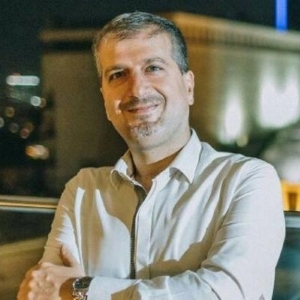
Christos is Professor in Knowledge Discovery and Software Engineering systems at the International Hellenic University, School of Science & Technology. He was Chair of the Department of Science and Technology and Dean of the School of Science and Technology, International Hellenic University (2021-23) and Vice Dean (2020-21). He is Director for the MSc in Smart Cities and Communities. Formerly he was an adjunct Associate Professor at the University of Ioannina, Dept. of Computer Science & Engineering, an adjunct Assistant Professor at the University of Western Macedonia, Dept. Engineering Informatics and Telecommunications, a tenured Lecturer at the University of Manchester, Schools of Computer Science and Informatics, as well as UMIST, Department of Computation
Studies
He holds a DEng (Hons) in Computer Engineering and Informatics (5-year studies-integrated Master) from the Department of Computer Engineering & Informatics at the University of Patras, and a BSc (Hons) in Law (4-year studies) from the Department of Law at the Democritus University of Thrace, in Greece. He also holds an MPhil in Computation from UMIST and a PhD in Informatics from the University of Manchester, U.K.
Research
His focal research area is data science, data mining, decision support, software engineering and smart cities, and his aim is to advance the use of data mining in domains such as medicine, sports, social media, energy and novel types of heterogeneous data. His research interests are in the areas of data mining and analytics, and software management, where he has published widely. His research objectives include bridging the gap between theories and applications of data mining, as well as establishing novel ways of retrieving information from data, text, social media and source code.
Publications
He published over 65 papers in international refereed journals and over 70 international refereed conferences, focusing on data mining algorithms, such as clustering, classification and association rules, and data mining applications in domains, such as software engineering, medicine, biology, sports analytics, social media, energy and smart cities. His work has been published in journals including IEEE Transactions on Knowledge and Data Engineering, Int’l Journal of Neural Systems, WIREs Data Mining and Knowledge Discovery, Integrated Computer-Aided Engineering, Smart Cities, Multimedia Tools and Applications, Information Systems, Methods of Information in Medicine, Advances in Data Analysis and Classification, Software Quality Journal, Information Systems Frontiers, Energies, Sustainable Computing: Informatics and Systems, Computing, Data & Knowledge Engineering, Int’l Journal of Data Mining and Bioinformatics, Applied Artificial Intelligence, and international referred conferences such as PVLDB, IEEE ICTAI, IEEE COMPSAC, IEEE WETICE, IEEE SMC, KSEM, IEEE ITAB, IEEE APSEC, IEEE IWPC, CSMR and IDEAL A list of publications can be found here.
Research projects
Christos led a number of research projects on software quality assurance using data mining, as well as on strategic maintenance and evolution of software. He was also involved as a principal investigator or co-investigator in a number of software and knowledge management projects. A list of research projects he has been involved with can be found here.
Research Supervision
Christos supervises 4 post-doctoral researchers as well as 5 PhD, and 7 MSc students.
Postdoctoral Researchers

Paraskevas is an Adjunct Lecturer and Postdoctoral Researcher in Data Science and Software Engineering at the School of Science & Technology of the International Hellenic University (IHU), and a Postdoctoral Research Associate at the Information Technologies Institute (ITI) of the Centre for Research and Technology Hellas (CERTH). He is an active member of the IHU Data Mining & Analytics (DAMA) research group and the Hellenic Artificial Intelligence Society. His research focuses on data science, machine and deep learning, and intelligent systems for decision support across domains such as smart cities, energy management, healthcare, and social media analytics.
He holds a PhD in Data Science from IHU and has extensive teaching experience in MSc programmes, covering Data Mining and Software Development Methodologies while supervising postgraduate research projects. He has authored more than 50 peer-reviewed journal articles, conference papers, and book chapters, and has participated in numerous European and national R&D projects, contributing to the development of applied AI solutions and data-driven digital intelligence systems.
Dr. Aristeidis Mystakidis is a Postdoctoral Researcher in Data Science and Artificial Intelligence at the International Hellenic University (IHU) and a member of the Data Mining and Analytics (DaMA) research group. He also serves as a Postdoctoral AI Research Associate and Data Science Team Leader at the Information Technologies Institute (ITI) of the Centre for Research and Technology Hellas (CERTH). His research focuses on machine learning and data-driven artificial intelligence, with particular emphasis on time series forecasting, energy systems, computer vision, cybersecurity analytics, and AI applications in smart cities and healthcare.
He holds a PhD in Data Science from IHU, along with degrees in Electrical and Computer Engineering, Business Administration, and Mobile and Web Computing. With over eight years of experience across academia and industry, he has contributed to European research projects and industrial collaborations, including partnerships with Samsung Electronics. He has authored more than 25 peer-reviewed publications and actively contributes to teaching, research supervision, and international scientific reviewing activities.


Dr. George Papageorgiou holds a PhD in Data Science from the International Hellenic University (IHU), School of Science and Technology, focusing on improved data science methods for real-world business applications. He also holds an MSc in Data Science from IHU and a BSc in Accounting and Finance from the University of Macedonia. His research interests include data science, artificial intelligence, machine learning, and algorithmic optimization for business and decision-support applications.
His work combines advanced predictive analytics, optimization techniques, and applied machine learning with practical experience in AI applications and big data analytics, aiming to bridge academic research with real-world business challenges.
Dr. Vangelis Sarlis is a Postdoctoral Researcher in Data Science at the International Hellenic University (IHU) specializing in sports analytics and data-driven business applications. He is an experienced Project and Product Management leader and Data Scientist with more than 15 years of professional experience across IT, business innovation, and research environments. His work focuses on applying data science, artificial intelligence, and advanced analytics to support digital transformation, decision-making, and organizational strategy across multiple industries.
He holds a PhD in Data Science for Sports Analytics from IHU, an MBA from ALBA Graduate Business School, an MSc in Computing & IT from the University of Sunderland, and a BSc in Physics from Aristotle University of Thessaloniki. Throughout his career, he has led large-scale projects and collaborations with organizations including the European Commission, major telecom providers, consulting firms, and public sector institutions, bridging business and technology through data-driven innovation and interdisciplinary leadership.

PhD Candidates

Vaia Apostolou is a Senior Manager and Technical Product Owner in Data Science and Artificial Intelligence at Pfizer’s Artificial Intelligence and Data Analytics (AIDA) department. Her work focuses on the design and delivery of enterprise-scale AI and Generative AI solutions, combining product strategy, technical architecture, and Responsible AI practices to develop governed, scalable, and compliant data-driven systems. Her expertise spans AI product development, machine learning operations, cloud-based data platforms, and trustworthy AI deployment across commercial and clinical domains.She is currently pursuing a PhD in Artificial Intelligence in Medicine at the International Hellenic University (IHU). She also holds an MSc in Banking and Finance from IHU and a BSc in Business Administration from the University of Macedonia. Her research interests include AI applications in healthcare, particularly cancer detection and diagnosis through multimodal data analysis, with emphasis on reliable evaluation, ethical AI, and real-world clinical impact.


Maria Vasileiou is a Software Engineer and PhD candidate in Data Science in Software Engineering at the International Hellenic University (IHU). She holds an MSc in Data Science from IHU and a Diploma in Electrical and Computer Engineering from the Democritus University of Thrace. Her research focuses on data-driven methods for software engineering, particularly the application of machine learning techniques to software quality assessment and defect detection.Alongside her academic work, she is a Software Engineer at Netcompany, where she develops scalable full-stack applications using modern web technologies within agile development environments. Her research has been published in international scientific venues, including IEEE and Springer, and reflects her broader interests in data science, software management, and intelligent systems for improving software development processes.

Dimitris Rousidis is an IT Instructor and PhD candidate at the International Hellenic University (IHU), where his research focuses on social media analytics and the improvement of forecasting algorithms. He holds degrees in Physics from Aristotle University of Thessaloniki, Library Science and Information Systems from IHU, and a Master’s degree in Computation from UMIST, UK.He has extensive teaching experience across higher education institutions and lifelong learning programmes, covering topics such as databases, web development, digital systems, and information technologies. With more than a decade of experience in vocational and adult education, he actively contributes to technology training and digital skills development, while maintaining strong research interests in data analytics and applied forecasting methods.
MSc Candidates
Alumni
Y. Al-Dara – Data Analytics for the Automatic Generation of Electricity Usage Recommendations
K. Apostolou – Sports Analytics algorithms for performance prediction
G. Asderis – Sentiment analysis on twitter data
A. Avramidou – Building CO2 emissions prediction using Machine Learning/ Data mining
D. Beleveslis – Heuristic Approach for Content Based Recommendation System Based on Feature Weighting and LSH
P. Belogianni – Recommendation systems
C. Charisiadis – Data Mining on Source Code
V. Chazan-Pantzalis – Sports Analytics Algorithms for Performance Prediction
V. Chouliara – Fake News Detection
K. Christantonis – Data mining for smart cities
C. Dontaki – Sentiment Analysis on English and Greek Twitter Data towards vaccinations
D. Gerakas – Basketball Analytics for Prediction of Performance during the last minutes of a game
O. Geromichalou – Traffic Prediction
S.M. Ghafari – Association rule mining
G. Giaglis – Programmatic Automation & Yield Optimization on the Ad Exchange
N. Giannakoulas – Sports Analytics Performance Prediction
D. Gkaimanis – Stock Market Prediction using Double-DQN and Sentiment Analysis
D. Iatropoulos – Sports Analytics Using Data Mining: NBA Player Quarter-by-Quarter Performance Exploration
C. Kaimakamis – Sports Analytics algorithms for performance prediction
D. Kalliantasis – Data mining for evaluating startups and forecasting stock fluctuations
E. Kapoteli – Sentiment Analysis Related to COVID-19 Vaccines
M. Karagkiozidou – Sentiment analysis on twitter data
P. Karatakis – Data Mining for Software Management: Automatic marking of complex Rust code using software metrics
D.P. Kasseropoulos – Influencer/ fake news detection in social media
L. Konstantopoulos – An automated tool for evaluating social media influencers
P. Koudoumas – Sports Analytics algorithms for performance prediction
A. Kousis – Data Science for Smart Cities
S. Liapis – Big Data mining for smart cities
C. Markopoulou – Sport Analytics Algorithms for Football Performance Prediction
S. Myrotheou – Sports Analytics for statistical analysis and predictions in Formula 1
O. Nalmpantis – Movie Recommender System
I. Nasiara – The Impact of Twitter Sentiment on Ryanair’s Business Performance
C. Nousi – Stock market prediction using data mining
L. Oikonomou – Mining Twitter data to Predict the USA 2016 election winner
V. Papanikolaou – Data mining for smart cities: Predicting energy consumption in public buildings
I. Papikas – Human Rating System
A. Paraskevopoulos – Product recommendation system
M. Patsiarikas – Predicting S&P 500 Daily Prices: Integrating Macroeconomic Factors with Technical and Sentiment Indicators Using Machine Learning Models
I. Schoinas – Product Recommendation system
F. Shaban – Electricity consumption prediction using data mining
B.S. Syuqran Naim – Big Data mining for smart cities
N. Stasinos – Data Science in Law
K. Stathakis – Using Data Mining to Analyze Temporal Trends in the Reporting of Method-Related Keywords
D. Tasios – Mining Traffic Data
T.-I. Theodorou – Traffic Prediction Techniques under Abnormal Traffic Conditions
K.V. Tompra – Enhancing preventive healthcare: Identifying high-risk patients for cardiovascular diseases
F. Touparis – Predicting stocks movement using social media analytics
I. Tourpeslis – Data mining for smart cities
O. Trasanidis – Decision making tool for smart cities
N. Tsalikidis – Data Mining/ML for Smart House infrastructure
V. Tsarapatsanis – Fake news detection
E. Tsiara – Forecasting with predictive social media analytics
V. Tsichli – Predicting Stock Market Movements Using Social Media and Machine Learning
M. Vlachos-Giovanopoulos – Forecasting with predictive social media analytics
S. Yakhchi – Big data mining